Across Uzbekistan
| Countries: | Uzbekistan | |
| Tour duration: | 12 days / 11 nights | |
| Itinerary: | Tashkent – Margilan – Rishtan – Kokand – Tashkent – Nukus – Muynak – Nukus – Mizdakhan Necropolis – Khiva – Bukhara – Samarkand – Tashkent | |

Travel across Uzbekistan on an unforgettable 12-day journey that reveals the country’s incredible diversity — from the vibrant craft traditions of the Fergana Valley to the stark landscapes of Karakalpakstan and the haunting Ship Graveyard in Muynak. Explore the legendary caravan cities of Khiva, Bukhara, and Samarkand, where the Silk Road’s spirit lives on in blue-domed mosques, madrasahs, and lively bazaars. Along the way, discover ancient necropolises, world-class museums, and authentic village life. This tour offers the fullest experience of Uzbekistan — a land where history truly lives.
itinerary / services & cost
Visa- Useful Information
Route Map
| Tour itinerary 2026: | ||
| Day 1 | Tashkent, arrival . This morning we arrive in Tashkent, Uzbekistan’s capital. After settling in at the hotel, we begin exploring the city: the Khast-Imam Square with its historic madrasahs and mausoleums, the vibrant Chorsu Bazaar full of colors and aromas, and later the wide Independence Square and Amir Temur Square. We’ll also ride the famous Tashkent Metro, often called an underground museum for its ornate stations. Overnight in Tashkent. Meals: breakfast. |
|
|
|
||
| Day 2 | Tashkent - Margilan by train. Today we travel by train (08:10-13:20) across the mountains into the fertile Fergana Valley. In Margilan, the heart of Uzbekistan’s silk industry, we visit the Silk factory of Margilan and see how delicate silk threads are spun, dyed, and woven into vibrant ikat fabrics. A stroll through the local bazaar and Said Ahmad Khoja Madrasah adds more color to our day. Overnight in Margilan. Meals: breakfast. |
|
|
|
||
| Day 3 | Margilan - Rishtan - Kokand by road, 100 km. Transfer to Tashkent by road, 240 km After breakfast, we drive to Rishtan, world-famous for its ceramics. At the workshop of a local ceramic master, we watch the process of shaping and painting pottery — and enjoy a traditional lunch in his home. Then we continue to Kokand, once the capital of the Kokand Khanate. Here we explore the grand Palace of Khudayar Khan, the Juma Mosque, and the Mausoleum of Modari Khan. In the evening we return to Tashkent, crossing the scenic Kamchik mountain pass. Overnight in Tashkent. Meals: breakfast. |
|
|
|
||
| Day 4 | Tashkent - Nukus by morning flight . Trip to Muynak by road, 400 km After breakfast we take a morning flight to Nukus, the capital of Karakalpakstan and the gateway to the vanished Aral Sea. On arrival we meet our local guide and set off for Muynak, once a thriving fishing port. At the town’s highest point, we visit the monument to the victims of WWII, now dedicated to the Aral Sea, and enjoy a panoramic view over the dry seabed. After a traditional lunch in a local guesthouse, we walk across the haunting “Cemetery of Ships”, where rusting hulls of fishing boats rest on the desert sands. We also visit the small museum at the House of Culture, which preserves the works of artists who once depicted the Aral Sea and the Amu Darya River. Evening transfer back to Nukus. Overnight at the hotel. Meals: breakfast, lunch. |
|
|
|
||
| Day 5 | Nukus - Mizdakhan Necropolis - Khiva by road, 200 km. This morning begins with a visit to the world-famous Savitsky Museum, often called the “Louvre of the Steppe.” Its extraordinary collection showcases avant-garde art once banned in the Soviet era, along with priceless examples of Karakalpak folk heritage. We then drive to the Mizdakhan Necropolis, a vast complex of ancient mausoleums and archaeological remains spread across a windswept hill near Nukus. Among its most notable monuments are the Mazlum-Khan Mausoleum, the hill of Jumart Kassab, and the shrine of Shamun Nabi, still visited by local pilgrims seeking blessings. Continuing through the desert, we explore the impressive fortresses of Ayaz-Kala and Toprak-Kala — powerful remnants of the ancient Khorezm civilization. Rising from the sands, these clay citadels once guarded trade routes and oases more than two thousand years ago. By late afternoon, we reach Khiva, a fairytale city of turquoise domes and mudbrick towers surrounded by ancient walls. Accommodation and overnight in Khiva. Meals: breakfast. |
|
|
|
||
| Day 6 | Khiva. After breakfast we dive into the magical atmosphere of Khiva, one of the most complete and best-preserved Silk Road cities. Within the ancient walls of Ichan Kala, we explore the Pakhlavan Mahmoud Mausoleum, the mighty Kunya-Ark Fortress, the elegant Islam Khodja Minaret and Madrasah, and the ornate Tash Khauli Palace, once home to the khans of Khiva. We walk through the Juma Mosque, famous for its forest of carved wooden columns, admire the Muhammad Amin Khan Madrasah. Overnight in Khiva. Meals: breakfast. |
|
|
|
||
| Day 7 | Khiva - Bukhara by road, 460 km. After breakfast, we set off on a long but fascinating drive across the Kyzylkum Desert. The endless steppe landscapes and the winding course of the Amu Darya River remind us of the ancient trade caravans that once crossed this very route. By evening, we arrive in Bukhara, a city that has preserved its medieval character more than any other in Central Asia. After checking into the hotel, we can take a short walk among souvenir shops and local workshops. Overnight in Bukhara. Meals: breakfast. |
|
|
|
||
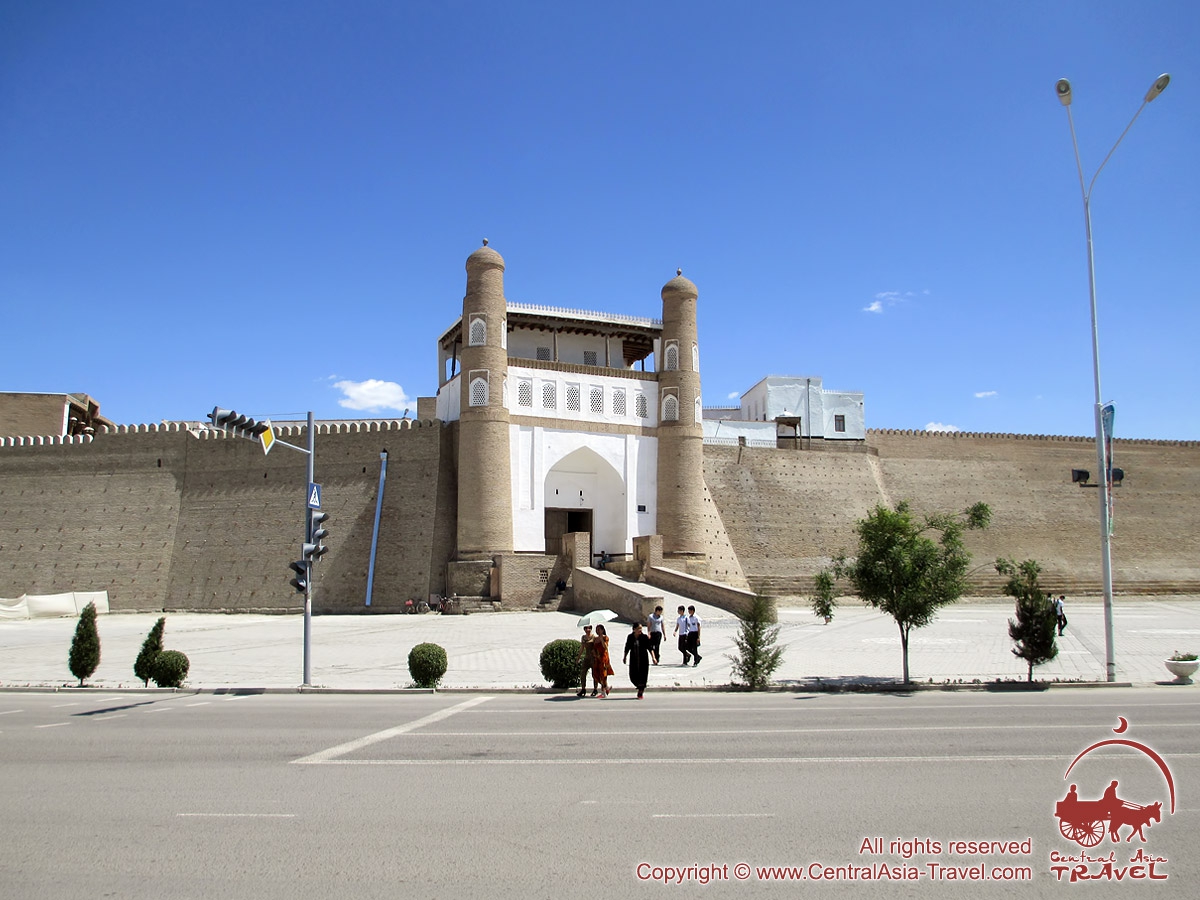
| Day 8 | Bukhara. We dedicate the whole day to exploring Bukhara, a city with over 2,500 years of history and more than 900 preserved monuments. Our sightseeing begins with the elegant Ismail Samani Mausoleum and the unusual Chashma Ayub Mausoleum, before continuing to the lively local bazaar. We admire the delicate architecture of the Bolo-Khauz Mosque and step into the mighty Ark Citadel, once the seat of Bukhara’s emirs, with its notorious Zindan prison. After lunch, we walk through the Po-i-Kalyan Complex, home to the towering Kalyan Minaret and the Miri-Arab Madrasah, then explore the Magoki Attori Mosque and the Ulugbek Madrasah. Evening return to the hotel. Overnight in Bukhara. Meals: breakfast. |
|
|
|
||
| Day 9 | Bukhara – Samarkand by road, 280 km. This morning, we continue our journey around Bukhara with visits to two important out-of-town sites. First, the beautiful Sitorai Mokhi-Khosa Palace, the summer residence of the last Emir of Bukhara, where Russian, Eastern, and European styles blend into one. Then, the spiritual Bahauddin Naqshbandi Complex, dedicated to the founder of the Naqshbandi Sufi order, still an active place of pilgrimage today. After lunchtime, we transfer to Samarkand. On arrival, we check into the hotel and rest. Overnight in Samarkand. Meals: breakfast. |
|
|
|
||
| Day 10 | Samarkand. After breakfast, we begin our discovery of Samarkand, the dazzling “pearl of the Silk Road.” We stand in awe at the magnificent Registan Square, framed by the Ulugbek, Sher-Dor, and Tilla-Qori madrasahs — one of the most breathtaking ensembles in the Islamic world. We then visit the Gur-e-Amir Mausoleum, the resting place of Tamerlane. After lunch, we admire the grandeur of the Bibi-Khanym Mosque, wander through the sacred Shah-i-Zinda Necropolis, and end the day at the Ulugbek Observatory, a testament to the scientific brilliance of the 15th century. Evening return to the hotel. Overnight in Samarkand. Meals: breakfast. |
|
|
|
||
| Day 11 | Samarkand - Tashkent by evening train. This morning, we continue exploring Samarkand’s treasures. We return to the Ulugbek Observatory for a closer look, visit the Afrasiab Museum with its unique murals, and stop at the Tomb of Saint Daniel, a revered local shrine. Later, we discover traditional crafts: the Khujum carpet factory and the silk paper workshop, where ancient techniques are still alive today. Before departure, we browse the colorful Siab Bazaar, filled with spices, dried fruits, and local specialties. In the afternoon, we take a train back to Tashkent. On arrival, transfer to the hotel and overnight. Meals: breakfast. |
|
|
|
||
| Day 12 | Tashkent, departure. Breakfast at the hotel. Check out before 12:00, followed by transfer to the international airport for departure. Meals: breakfast. |
|
|
|
||


| ||||||||||||||||||||||||||||||
| ||||||||||||||||||||||||||||||


Tour price includes:
|
Tour price does not include:
|
*Tickets on a high-speed train are subject of availability and cannot be guaranteed in advance
Information on the hotels
| Location | Hotels 3* | Hotels 4* |
| Tashkent | Huvaydo hotel 3* or similar | Inspira-S Hotel 4* or similar |
| Nukus | Pana Hotel 3* or similar | Pana Hotel 3* or similar |
| Khiva | Khiva Residence 3* or similar | Asia Khiva Hotel 4* or similar |
| Bukhara | Rangrez Hotel 3* or similar | Paradise Plaza 4* or similar |
| Samarkand | Arba Hotel 3* or similar | Continental Hotel 4* or similar |
Transportation
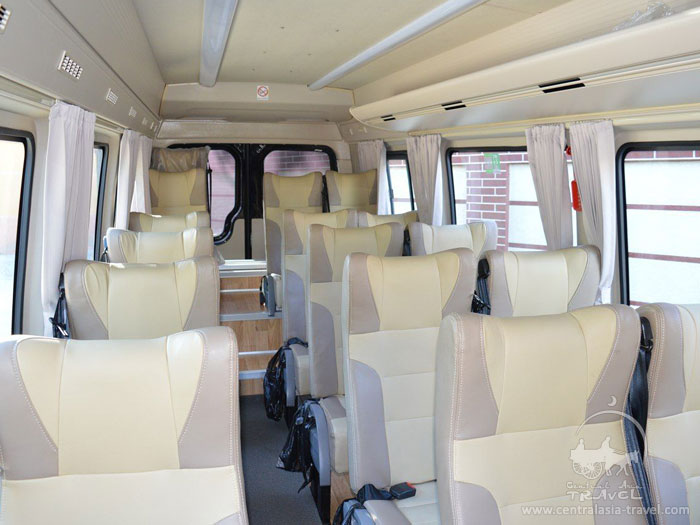
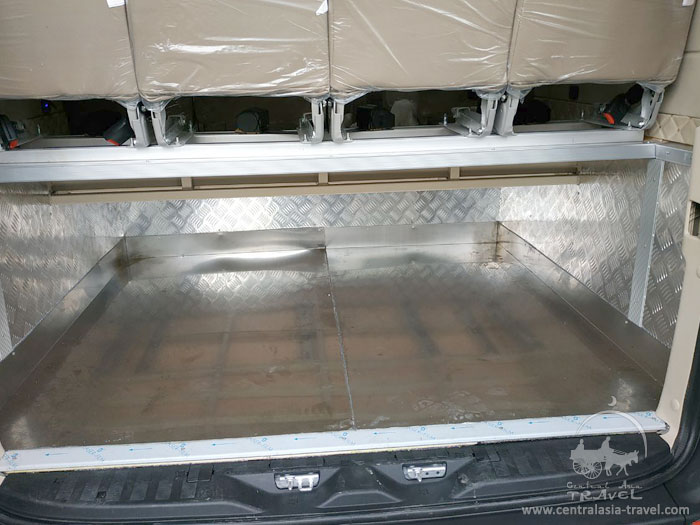
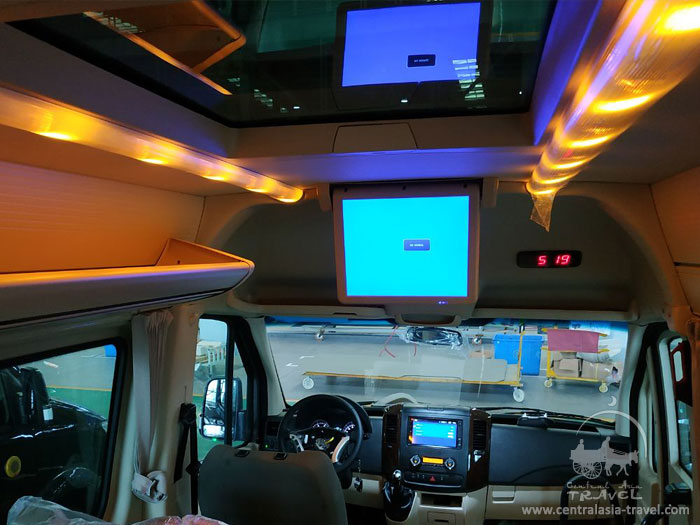
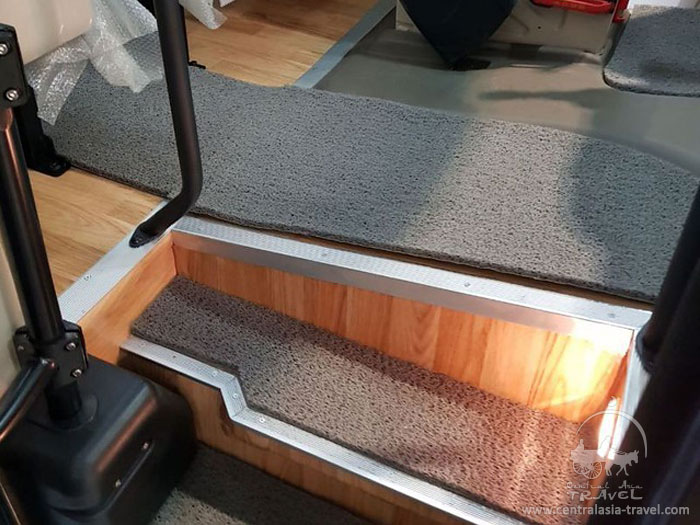
Depending on the size of a group the following means of transportation are used during the tour:
| Group | Type of transport |
| Group of 1-2 pax | "Chevrolet Lacetti" or similar |
| Group of 4 pax | "Hyundai Starex minivan" |
| Group of 6-8 pax | "King Long minivan" or similar |
| Group of 9-14 pax | "Eurise minivan" or similar |
Visa to Uzbekistan:
Visa-free regime for up to 60 days has been established for citizens of countries below:
|
|
|
|
|
Visa-free regime for up to 30 days has been established for citizens of countries below:
|
|
|
|
|
A great number of other countries can obtain an e-visa to Uzbekistan by simply visiting the governmental portal e-visa.gov.uz.
Frequently Asked Questions
- Is it necessary to get a stay permit (temporary registration of stay) while visiting Uzbekistan?
Any foreigner to Uzbekistan is to get a stay permit within 3 working days (consecutive or not) during his / her visit to the country. If he / she stays at an Uzbekistan hotel or a guesthouse, such a stay permit for the period of stay at it is granted automatically. (Inquire whether the hotel / guesthouse you want to stay at provides such a permit unless your accommodation is organized by a host tour operator. Also make sure you are given your stay permit certificate with the seal of your hotel / guesthouse when you check out.) If you stay at other lodging facilities during your visit, you will have to get your stay permit from a local visits registration police department. - What is Uzbekistan’s currency? Where can I exchange money?
The national currency of Uzbekistan is the som (UZS). There are 100, 200, 500, 1.000, 5.000, 10.000 and 50.000-som banknotes used currently. The banknotes are similar in size but vary in color; they depict Uzbekistan’s cultural and heritage sites.
You can exchange money at Uzbekistan’s National Bank outlets, most of the hotels and official currency exchange offices commonly located near bazaars and at shopping centers. You will need your passport to exchange money through them.
Note that the most common foreign currency in Uzbekistan is US dollars. The US banknotes you exchange in the country should be in good condition - without defects, bad folds, worn areas and scribbles - or it will be hard to exchange them. - Can I use credit cards in Uzbekistan?
You can use Visa and MasterCard cards mainly in Tashkent and at fewer locations in Samarkand and Bukhara for cash withdrawals through ATMs (cash machines) in their large hotels or banks. You can also make payments with these cards at some hotels, restaurants and stores in Tashkent. However, technical failures of the card handling equipment may occur, so it is advisable to always have enough cash on you. - What is the difference between GMT and Uzbekistan time?
It is GMT plus 5 hours in Uzbekistan. - Can foreigners to Uzbekistan use the services of a local mobile network operator during their stays in the country?
Yes, they can if they have a stay permit to show. - Can I bring alcoholic beverages into Uzbekistan?
A person is permitted to bring a maximum of 2 liters of alcoholic drink(s) into the country. - What maximum amount of cash can I bring into Uzbekistan?
There is no limit on the amount of cash in a currency that is foreign to Uzbekistan a person can bring into the country. If you bring in over 5,000 USD (or the equivalent in other currencies), you will be given a ТС-28 certificate. If you bring in over 10,000 USD, you will have to pay a 1% duty on this sum. - What maximum amount of cash can I take out of Uzbekistan?
The amount of cash (in a currency foreign to Uzbekistan) you can take out of the country must not exceed the sum you brought in as per your arrival customs declaration. Taking out the amount exceeding the sum you brought in is possible if permitted by Uzbekistan’s Central Bank or another Uzbekistan’s authorized bank. Note that taking out Uzbekistan soms is not permitted unless they are several souvenir coins or banknotes. - Can I use a photo / video camera at the tourist sites?
Photographing and videoing at the tourist sites is allowed unless a site has a prohibition sign. They charge fees for using cameras at most tourist attractions though. Photographing and videoing is prohibited in Tashkent metro, at the airports and railway stations. Using a camera at the functioning mosques is possible if allowed by the worshippers there. - What kind of clothes should I wear in Uzbekistan? Are there any clothing requirements for women in the country?
Clothes made of cotton and other natural textiles will be the best choice in warm and hot weather. Both men and women will feel best in T-shirts and shorts. Your footwear must be comfortable, light and strong, since you will have to walk a lot. Have sunglasses, a light headwear and sunblock lotion.
If you travel early in spring (March to the beginning of April) or at the end of autumn (October to November), it is advisable to take a windbreaker, a sweater or a similar garment. In winter the temperature may fall to minus 10°С or so, so a raincoat, a warm coat and headwear will be necessary.
There are no strict limits on women’s clothing in the country. However, you should be considerate towards the local traditions, culture and religion. While visiting religious places women should wear loose garments covering most of their arms and legs, and of course the cleavage. Headscarves will also be advisable to put on. Note that you will have to take off your shoes while entering some of the sacred places. - What languages do people in Uzbekistan speak?
The official language is Uzbek; it is spoken by a majority of the population. Russian is spoken by the country’s largest Slavic minority and is still used widely in business and as a lingua franca, especially in Tashkent and other major cities. Tajik is widespread in Samarkand and Bukhara for their large Tajik ethnic minorities. Karakalpak is spoken in the Autonomous Republic of Karakalpakstan where it is an official language besides Uzbek. English is popular as a foreign language to study but there is little chance of coming across a good English speaker in the street. However, in the historic cities of Bukhara and Samarkand many young souvenir sellers dealing with foreigners speak elementary English.
Useful Information on Traveling to Uzbekistan

Photos of the tour:
 |
 |
 |
 |
Our video gallery:
 Cuisine of Central Asia |
 Tashkent Tourist Attractions |
 Uzbek fruit and vegetables |
 Lively Kyzylkum desert |
© Copyright © Central Asia Travel
All rights reserved. No part of this publication may be reproduced without written permission of the copyright owner.
Heritage group tours: |
Adventure group tours: |
Other interesting tours:
|
Usefull links: |
TOUR ORDER
Book a guided tour
To submit the form you need to consent to the processing of personal data.