The Silk Road tour - from China to Transoxania
Tour around 5 countries of the Great Silk Road: China - Kyrgyzstan - Uzbekistan - Tajikistan - Kazakhstan
| Countries: | China - Kyrgyzstan - Uzbekistan - Tajikistan - Kazakhstan | |
| Tour duration: | 25 days / 24 nights | |
| Best time to travel: | March - June; September - November | |
| Itinerary: | Urumqi - Turpan - Kucha - Hotan - Yarkand - Kashgar - Torugart - Kochkor village - Issyk-Kul Lake - | |
| - Bishkek - Osh - Fergana - Margilan - Rishtan - Kokand - Fergana - Khujand - Samarkand - Bukhara - Tashkent - Shymkent - Turkestan - Otrar - Shymkent - Almaty | ||

For thousands of years the Great Silk Road was connecting China to the Mediterranean and facilitating cultural exchange between two major civilizations of that time - the Eastern and the Western one. For thousands of years numerous caravans with expensive silk, exotic spicery and gems were moving along this famous trading route, immense caravanserais, majestic mosques and madrassas were rising along the road. And now you have got a possibility to follow that same ancient route yourself!
itinerary / services & cost
Visa
useful information
| Itinerary: | |
| Day 1. | Arrival in Urumqi. Urumqi - Turpan (road transfer, 195 km). Arrival in Urumqi. Meet at the airport and transfer to the hotel 5* for breakfast without accommodation. After breakfast transfer to Turpan. Accommodation at the hotel upon arrival. Rest. Overnight in Turpan. |
| Day 2. | Turpan. Breakfast at hotel. Meet guide at the hall of the hotel. Start of the sightseeing tour in Turpan. In the first half of the day visit the impressive ruins at Gaochang ancient city (47 km), built in the 2nd century BC, it became the capital of the Kingdom of Gaochang under the Han dynasty, destroyed around 14th century. After that take a donkey cart taxi to venture deep into this famous ancient site. Get inside of Nur-Sultan Tombs to see well preserved mummies and unique wall paintings dated back to 2AD and Kanel irrigation system. After lunch visit Jiaohe ruins directly. Jiaohe ruins dates from 1st BC and flourished around 5th AD. Much of the city structure is understandable with well laid out city plan the administrative section to housing settlement and to the secular parts with surviving Stupa ruins. After that visit local market. Transfer to the hotel. Overnight. |
| Day 3. | Turpan - Kucha (road transfer, 680 km). After breakfast at the hotel transfer to Kucha. Visit populous euphratica forest en route. On arrival to Kucha transfer to the hotel for accommodation and rest. |
| Day 4. | Kucha. Breakfast at the hotel. Start of the guided sightseeing tour in Kucha upon arrival. Visit the following sites: Kezir Thousand-Buddha grottoes and Tianshan Kucha Grand Canyon. Transfer to the hotel. Accommodation and overnight. |
| Day 5. | Kucha - Hotan (road transfer, 660 km). Breakfast at hotel. Transfer to Hotan via Taklamakan desert. On arrival in Hotan, transfer to the hotel for accommodation and rest after a long journey. |
| Day 6. | Hotan - Yarkand (road transfer, 310 km). Breakfast at the hotel. In the first half of the day visit Hotan Sunday market (works on Sundays only). Further transfer to Yarkand. On arrival in Yarkand, visit Amanisha Khan tomb, Yarkand Royal mausoleum, and local bazaar. Transfer to the hotel, accommodation and overnight. |
| Day 7. | Yarkand - Kashgar (road transfer, 200 km). Morning transfer from Yarkand to Kashgar. Visit Yingysar knives making factory en route. On arrival in Kashgar transfer to the hotel for accommodation and rest. |
| Day 8. | Kashgar. Breakfast at hotel. Start of the guided sightseeing tour in Kashgar. Visit the family mausoleum of Apak Hoja, which was built in 1640. It is the typical Uygur muslin building in Kashgar and it is regarded as the holy place by the local people. After that visit the colorful unique and extremely chaotic Great Sunday bazaar where you will see numerous sections: silk and cotton, knives, hats, pots and pans, fresh vegetables and fruits, carpets and jewelry, there is a separate livestock and horse sections located in 6 km from the main market as well as agriculture products section. Last points of today’s city tour will be Id-Khah mosque (1442’s) and the handcrafts street. The street is crowded during weekend; there are a lot of workshops beside the road. Accommodation at the hotel and overnight. |
| Day 9. | Kashgar - Torugart Pass (road transfer, 170 km) - Tash Rabat - Naryn (240 km). After breakfast transfer to the land border with Kyrgyzstan. Border formalities in Chinese portion of the border. Meet the Kyrgyz team on the pass, at the demarcation line between Kyrgyzstan and China. Pass all border formalities on Kyrgyz side as well. After crossing the border you will be transferred to Tash Rabat caravan Serai to explore this 14th century historical site. After excursion in Tash Rabat transfer to the town of Naryn. Accommodation and rest at the hotel on arrival. |
| Day 10. | Naryn - Kochkor village - Issyk-Kul Lake (road transfer, 280 km). After breakfast transfer to the second world’s largest alpine lake - Issyk-Kul, the pearl of Kyrgyzstan. Stop in Kochkor village to visit the handicraft workshop. Here Kyrgyz felt carpets making process can be organized for additional price. Continue driving along the north shore of the lake to Cholpon-ata. En route visit museum of petroglyphs, located in the open air, and the temple of Scythian culture. After lunch visit the local historical museum. Accommodation at the hotel. |
| Day 11. | Issyk-Kul Lake - Bishkek (road transfer, 280 km). After breakfast transfer to Bishkek. Visit Burana Tower (ancient minaret) near Tokmok city - the minaret was constructed in Balasagun town, one of the capitals of Karakhanid State. Considered to be an important trading point of the Great Silk Road, you will explore its ruins and visit a little local museum telling us about that civilization. Here you will see a collection of Balbals, Turkic ancient tombs. Further transfer to Bishkek. Start the guided sightseeing tour upon arrival. Visit the following sites: Central square Ala Too, where you will have an opportunity to watch a ceremony of changing the Guard of Honor; further visit of Manas Monument, the main national hero of the Kyrgyz people, Oak Park, the National Arts Museum, National Philharmonic and Asian Bazaar. Accommodation and rest at the Hotel. |
| Day 12. | Bishkek - Osh (morning flight). After breakfast transfer to Manas airport to take the morning flight to Osh. Upon arrival in Osh start the sightseeing tour. Visit Sulaiman Mount, one of the main shrines of the Islamic world in Central Asia. Here you will follow the way of all pilgrims up to the top of the hill where you watch a little mosque of Babur, the Great Mogols Dynasty founder, and take a bird eye’s view of the city. After that you will visit Osh Bazaar, it was the largest open Bazaar in Central Asia in former times. We walk around the colorful rows of Golden market, watching black smiths working and smelling aromas of spices, fruits and vegetables of Food market. And finish the immersing into oriental life by visiting the handicraft rows. Overnight at the hotel. |
| Day 13. | Osh - Uzgen town (road transfer, 54 km) - “Dustlik” land border - Fergana (road transfer, 170 km). Breakfast at the hotel and further transfer to Uzgen town (54 km from Osh) to visit the ancient minaret and mausoleums here. Uzgen was one of the capitals of Karakhanid State, occupied vast areas in Central Asia in 10-12 centuries AD. Islam became state religion in this khanate in Central Asia, that is why minaret and mausoleums of governors were situated in the very citadel (center) of the city. After lunch transfer to the land border with Uzbekistan. Border formalities. Meet Uzbek guide and driver and further transfer to Fergana. Accommodation at the hotel on arrival. Overnight in Fergana. |
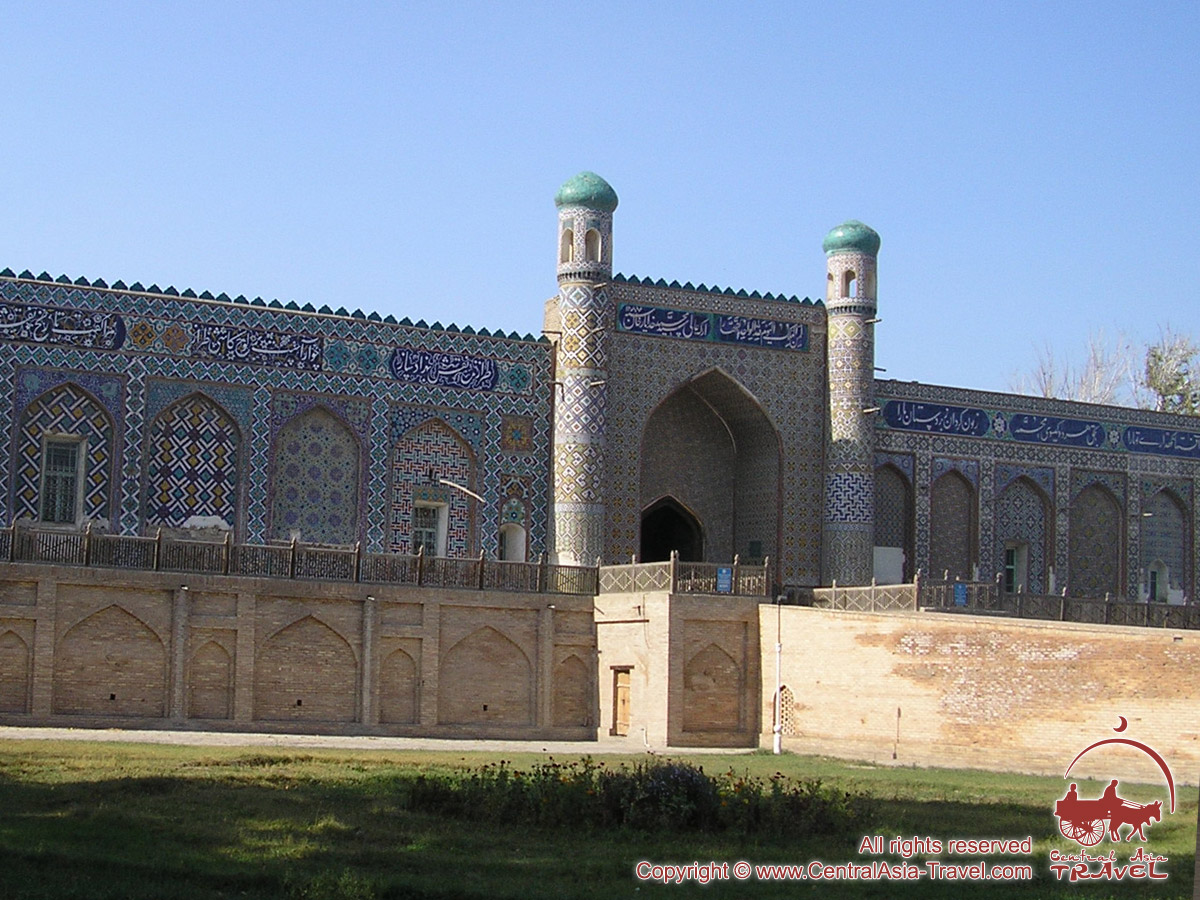
| Day 14. | Fergana - Margilan - Rishtan - Kokand (road transfer, 95 km) - Fergana (road transfer, 95 km). Breakfast at the hotel. Today we start exploring Fergana valley - the ancient part of Silk route. Transfer to Margilan. In Margilan visit “Yodgorlik” silk factory which is famous for handmade khan-atlas and local bazaar. Further transfer to Rishtan and visit pottery workshops of Rustam Usmanov and Alisher Nazirov (unique hand-made ceramics). Transfer to Kokand. Sightseeing tour around Kokand: Palace of Khudayar Khan, Mausoleum of Modari Khan, Juma Mosque, necropolis Sarymodor. Return to Fergana. Rest at the hotel. |
| Day 15. | Fergana - “Andarkhan” land border (road transfer, 135 km) - Khujand (road transfer, 95 km). Breakfast at the hotel and further transfer to the land border with Tajikistan. Border formalities. Meet Tajik guide and driver and further transfer to Khujand. Start of the sightseeing tour in Khujand upon arrival. Visit Orient bazaar Panjshanbe - famous Panjshanbe city market, one of the most interesting sights of Khujand. Further visit of Sheikh Muslihiddin Masque and Mausoleum of Khujand. Accommodation at the hotel and overnight. |
| Day 16. | Khujand - "Oybek" land border - Samarkand (road transfer, 360 km). After breakfast at the hotel we‘ll continue sightseeing of Khujand, visit ancient part of Khujand: Timurmalik fortress, Archeology and History museums, Historical Cultural Complex "Istiklol" with a beautiful viewpoint from the top of a huge crown. Transfer back to the land border with Uzbekistan after lunch. Border formalities. Meet by Uzbek guide and driver and further transfer to Samarkand. Accommodation at the hotel upon arrival. Overnight. |
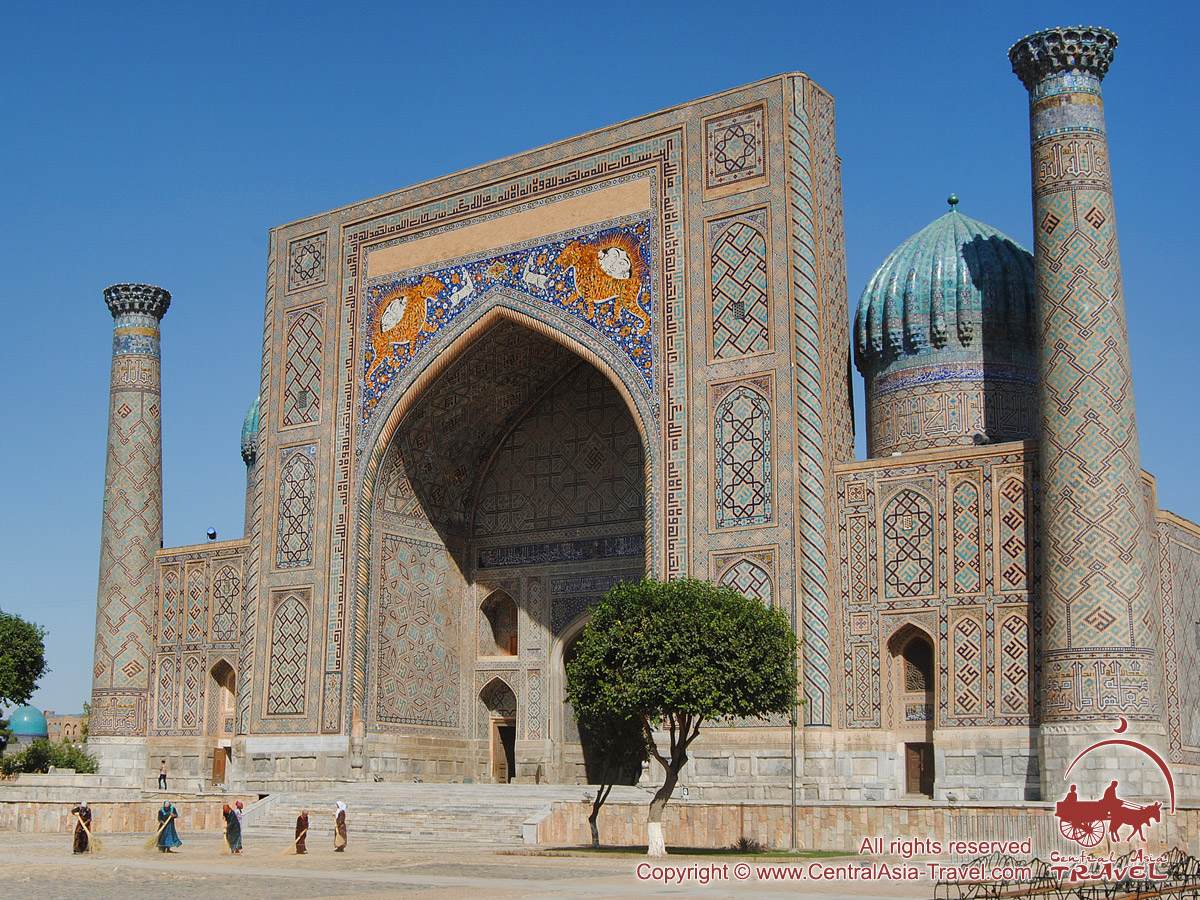
| Day 17. | Samarkand. Breakfast at the hotel. Guided sightseeing tour around Samarkand: Registan Square (Ulugbek Madrasah, Sher-Dor Madrasah, Tilla-Qori Madrasah), Gur-e Amir Mausoleum (Tamerlane’s sepulcher), after lunch: Bibi-Khanym Mosque, Shah-i-Zinda Necropolis, Ulugbek Observatory. Overnight at the hotel. |
| Day 18. | Samarkand - Bukhara (road transfer, 280 km). Breakfast at the hotel. Continuation of the guided sightseeing tour around Samarkand: St. Daniel Mausoleum, Afrosiab museum and settlement, Silk paper workshop. Transfer to the railway station in the afternoon. Further transfer to Bukhara. Accommodation at the hotel upon arrival and overnight. |
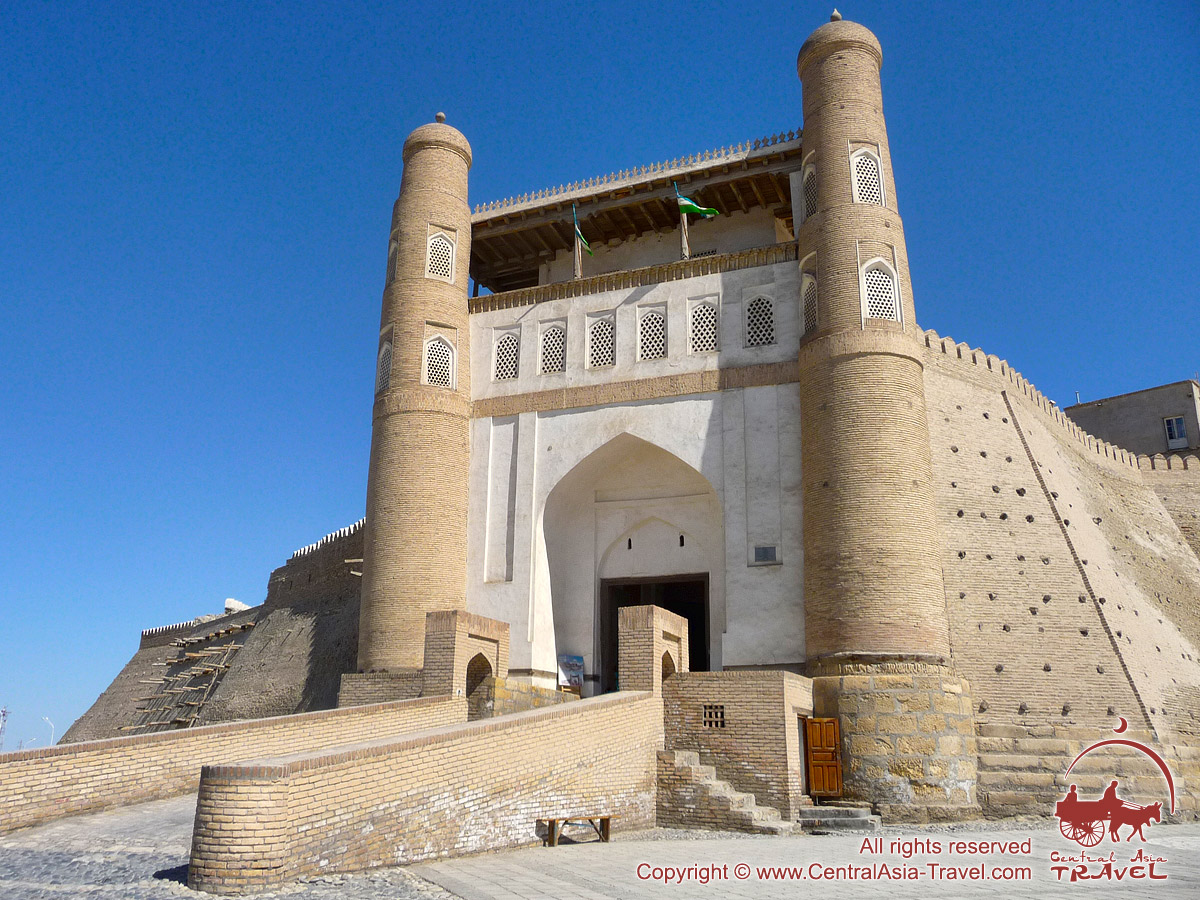
| Day 19. | Bukhara. Breakfast at the hotel. Guided sightseeing tour around Bukhara. Visit the following sites: Ismail Samani Mausoleum, Chashma Ayub Mausoleum, Bolo Khauz Mosque, Ark Citadel, Po-i-Kalyan Complex (Kalyan Minaret and others), Ulugbek Madrasah; after lunch: Lyab-i Hauz Architectural Ensemble, Kukeldash Madrasah, Nadir Divan-Begi Madrasah, domed shopping arcade. Overnight at the hotel. |
| Day 20. | Bukhara - Tashkent (afternoon train). After breakfast continuation of the sightseeing tour - transfer 4 km from Bukhara to visit the out-of-town sites: Sitorai Mokhi-Khosa Palace, memorial complex of the Islamic saint Baha-ud-Din Naqshband, Chor-Bakr Memorial Complex. After lunch transfer to the railway station and further transfer to Tashkent by train. Accommodation at the hotel upon arrival and overnight. |
| Day 21. | Tashkent. After breakfast start of the guided sightseeing tour around Tashkent. Visit the following sites: Khast-Imam Square, Barak-Khan Madrasah, Kafal-al-Shashi Mausoleum, Kukeldash Madrasah; after lunch: Independence Square, Amir Timur Square, Minor Mosque. Overnight at the hotel. |
| Day 22. | Tashkent - "Jipek Joli" land border - Shymkent - Turkestan (road transfer, 300 km). Here the main road of the Silk route ends, but we will move to another direction and visit one of the alternative destinations: jems of South Kazakhstan - ancient cities of Turkestan and Otrar, which were in a great prosperity when long caravans used to move along these territories. After breakfast transfer to the land border with Kazakhstan. Border formalities. Meet Kazakh driver and further transfer to Turkestan. After lunch start of the guided sightseeing tour in Turkestan with a guide. Visit the Mausoleum of Khodja Ahmet Yassawi (UNESCO HERITAGE). Khodja Ahmet Yassawi complex was built in the end of the 14th century and since has become one of the main places of worship in Islam. |
| Day 23. | Turkestan - Otrar - Shymkent (road transfer, 270 km). Breakfast at the hotel. Further transfer to Otrar ancient city (100 km, 1 hour 35 min). In ancient times Otrar was a large oasis containing a series of town and cities with its own names: Altyntobe, Dzhalpak-tobe, Kuyuk-Mardan-tobe and Pchakchi-tobe. En route to Shymkent you will also pass: The Museum in village Shaulder. The Mausoleum of Arystan-bab of XII century - one of Muslim shrines in Central Asia that is famous as pilgrimage place. Short city tour on arrival in Shymkent. Transfer to the hotel, accommodation and overnight. |
| Day 24. | Shymkent - Almaty (morning flight). Breakfast at the hotel. Further transfer to the airport and flight to Almaty. Meet the local guide and start of the sightseeing tour in Almaty: To feel the city’s real taste, its atmosphere and local color you should visit the Green Bazaar. Take part in a food tasting of national delicacies, including horse milk and camel milk. After lunch continuation of the city tour and visit Park of 28 Panfilov Guardsmen, The Ascension Cathedral and Museum of national musical instruments and Central Mosque. Further transfer to Kok Tobe Hill and Kok Tobe park - one of the symbols of Almaty city. Transfer to the hotel. Accommodation and overnight. |
| Day 25. | Almaty, departure. Breakfast at the hotel. Transfer to the airport. Departure. |
The cost tour includes:
- Accommodation at the hotels (mentioned below or in similar, but of the same category) in double/twin rooms with breakfasts. Check-in at the hotels - at 14:00; check-out - at 12:00;
- Meals - breakfasts at the hotels, including breakfast at 5* hotel in Urumchi upon arrival (without accommodation); two lunches and one dinner in Khujand;
- Services of English-speaking local guides (separate accompanying guides in each country):
- China - English speaking accompanying guide;
- Kyrgyzstan - English speaking accompanying guide;
- Uzbekistan - English speaking local guide in Fergana valley and accompanying guide from “Oybek” land border till Tashkent;
- Tajikistan - English speaking accompanying guide;
- Kazakhstan - English speaking local guides in Kazakhstan (separate guides in each city);
- Entrance fees at museums and historical parks mentioned in the program, including a fee to the cable car to Kok Tobe Hill, Medeo - Shymbulak - Talgar Pass;
- Local food tasting at Green Bazaar in Almaty;
- Local flight of Bishkek-Osh destination (economy class);
- Railway transfer on a high speed train of Bukhara-Tashkent destination (economy class);
- Transportation services on comfortable air-conditioned vehicles (sedan cars or minibuses - depending on the number of tourists in a group);
- Mineral water for each day of the tour;
The cost tour does not include:
- International flights;
- Local flight of Shymkent-Almaty destination - from 100 USD/per person (this cost is a subject to change!);
- Guide services during transfers between the cities and meeting/seeing off at the airport/land border;
- Visa invitations if necessary;
- Visa fees if necessary;
- Meals (except mentioned above).
Additional costs (upon request):
- Visa invitation to China - 25 USD/per person (if necessary);
- Group visa to Kyrgyzstan (can be issued by our company for a group of 4+ tourists) - 70 USD/per person (if necessary);
- Visa invitation to Uzbekistan - 45 USD/per person (if necessary);
- Visa invitation to Kazakhstan - 65 USD/per person (if necessary);
- Supplement for meals, except mentioned (optional):
- Meals on full board basis - 780 USD/per person for the whole tour;
- Meals on full board basis - 415 USD/per person for the whole tour;
Hotels
We choose the most conveniently located and reputable hotels for our customers to stay at. The list of the hotels we offer is below. However, due to seasonal conditions and group size this list is subject to change.
- Standard - inexpensive yet cozy private hotels, with traditional national interiors in many of them, providing all the necessary facilities for comfortable stays; notable for very warm hosting and home-like atmosphere;
- Comfort - very comfortable hotels providing excellent facilities and services; mainly located in or near city centers.
This tour comes with the following accommodation:
| City | Standard | Comfort | ||
| Turpan | Huozhou Oasis Hotel 3* | or similar | Twin Cities Hotel 4* | or similar |
| Kucha | Lidu Hotel | or similar | Lidu Hotel | or similar |
| Hotan | Mustagh Hotel 3* | or similar | Zhejiang Hotel 4* | or similar |
| Yarkand | Yarkand Hotel | or similar | Yarkand Hotel | or similar |
| Kashgar | Nurlan Hotel | or similar | Nurlan Hotel | or similar |
| Naryn | Khan Tengry Hotel 3* | or similar | Khan Tengry Hotel 3* | or similar |
| Issyk-Kul Lake | Kapriz Issyk-Kul Hotel | or similar | Kapriz Issyk-Kul Hotel | or similar |
| Bishkek | Discovery Hotel 3* | or similar | Plaza Hotel 4* | or similar |
| Osh | Sun Rise Hotel 3* | or similar | Classic Hotel 4* | or similar |
| Fergana | Club 777 Hotel 3* | or similar | Asia Fergana Hotel 4* | or similar |
| Khujand | Khujand Deluxe Hotel 4* | or similar | Khujand Deluxe Hotel 4* | or similar |
| Samarkand | City Hotel 3* | or similar | Sultan Boutique Hotel 4* | or similar |
| Bukhara | Fatima Hotel 3* | or similar | Devon Begim Hotel 4* | or similar |
| Tashkent | Lake Park Hotel 3* | or similar | Shark Hotel 4* | or similar |
| Turkestan | Turkestan Hotel 3* | or similar | Khanaka Hotel 4* | or similar |
| Shymkent | FM Hotel 3* | or similar | Aidana Plaza Hotel 4* | or similar |
| Almaty | Kazakhstan Hotel 3* | or similar | Kazzhol Hotel 4* | or similar |
Visa to China:
Visa to China can be obtained according to the personal tourists’ request to the Chinese Embassy, located in the country of tourists’ residence. The letter of visa invitation will be provided by our company; in most cases this document and the tourist’s own visa application form are enough for getting visa. In case the Embassy requests the tourist for an official visa invitation from the MFA of China, it will be provided (for supplement, as stated in the tour program).

Visa to Uzbekistan:
Visa-free regime for up to 60 days has been established for citizens of countries below:
|
|
|
|
|
Visa-free regime for up to 30 days has been established for citizens of countries below:
|
|
|
|
|
A great number of other countries can obtain an e-visa to Uzbekistan by simply visiting the governmental portal e-visa.gov.uz.
Read more about visa to Uzbekistan here »»
Visa to Kyrgyzstan
Under current rules visa-free stay within unlimited period on the territory of Kyrgyzstan is granted for the nationals of the following countries:
|
|
|
|
|
|
List of states granted visa-free stay up to 90 days: Mongolia, Ukraine
List of states granted visa-free stay up to 60 days
|
|
|
|
|
Visa-free access to Kyrgyzstan up to 30 days: Malaysia.
Read more about visa to Kyrgyzstan here »»
Visa to Kazakhstan:
Visa-free regime for up to 90 days has been established for citizens of countries below:
|
|
|
|
|
Visa-free regime for up to 30 days has been established for citizens of countries below:
|
|
|
|
|
Visa-free regime for up to 14 days has been established for citizens of: Hong Kong
Read more about visa to Kazakhstan here »»
Visa to Tajikistan:
Currently the foreign citizens have an opportunity to obtain Tajikistan visa on-line on the official web here: www.evisa.tj.
Visa invitation from the MFA of Tajikistan is not necessary. Cost of visa online is 50 USD/per person and cost of the GBAO permit is 20 USD/per person.
Please, note, this program does NOT require the necessity of GBAO permit.
- Useful Information on Traveling to China
- Useful Information on Traveling to Kyrgyzstan
- Useful Information on Traveling to Uzbekistan
- Useful Information on Traveling to Tajikistan
- Useful Information on Traveling to Kazakhstan
Useful Information on Traveling to China:
Useful Information on Traveling to Kyrgyzstan:
Useful Information on Traveling to Uzbekistan:
Useful Information on Traveling to Tajikistan:
Useful Information on Traveling to Kazakhstan:
Photo of the tour:
 |
 |
 |
 |





© Copyright © Central Asia Travel
All rights reserved. No part of this publication may be reproduced without written permission of the copyright owner.
Heritage group tours: |
Adventure group tours: |
Other interesting tours:
|
Usefull links: |
TOUR ORDER
Book a guided tour
To submit the form you need to consent to the processing of personal data.